
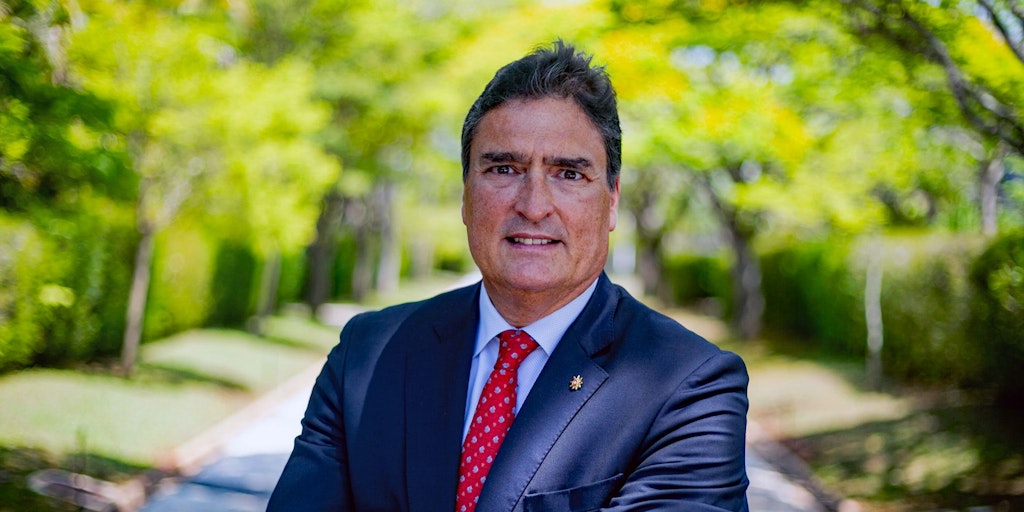
Hanspeter Mock: “Brazil presents major challenges but also opportunities.”
At the UN climate conference COP30, which this year will take place in Belém in the heart of the Amazon, Switzerland, through its representation in Brasilia, will progressively outline its historical and present commitments to sustainability and global biodiversity. We talk to Switzerland's ambassador to Brazil, Hanspeter Mock.
This year COP30 will be held in Belém in the Amazon region. What significance do you attach to the choice of location?
Holding COP30 in Belém, on the doorstep of the Amazon region, has taken on a special dimension: it gives the conference a unique symbolism. This region presents major challenges but also opportunities. By taking place in the heart of this territory, this COP also highlights the essential role played by local and indigenous communities in protecting the climate.
Your embassy in Brasilia has created the Road to Belem programme in the run-up to COP30 and put various projects into action. Why is this initiative so important for your embassy?
This subject is particularly important for our embassy, as it forms part of the historic and strategic relationship between Switzerland and Brazil, based on a ‘virtuous triangle’ combining innovation, the economy and sustainability. COP30 represents a unique opportunity to strengthen this cooperation to protect the Amazon region, a key player in the global fight against climate change. Through the Road to Belém initiative, we are bringing Swiss and Brazilian stakeholders together around targeted projects in the fields of science, culture, the economy and sustainable development, which reflect this shared view and give greater visibility to Switzerland's commitment to sustainability.
Through the Road to Belém initiative, we are bringing together Swiss and Brazilian stakeholders to work on targeted projects in the fields of science, culture, the economy and sustainable development.
Can you tell us more about the work behind the scenes carried out in Brazil with the entire Swiss network (whole-of-government approach) to set up this programme?
The implementation of this programme is based on close collaboration between the Swiss stakeholders in Brazil and Bern, as part of a genuine spirit of cooperation between institutions. In Brazil, the embassy is working in tandem with Swissnex, the Swiss Business Hub for Brazil and the consulates general, combining diplomacy, innovation, the economy and sustainability. In Bern, the Federal Office for the Environment, the Swiss Agency for Development and Cooperation, the State Secretariat for Economic Affairs and the State Secretariat for Education, Research and Innovation, as well as Presence Switzerland, are supporting this initiative. This integrated approach makes it possible to effectively mobilise Switzerland's diplomatic, economic and scientific resources to align its international priorities with concrete local partnerships in the Amazon region, while strengthening its credibility and visibility in the area of sustainability.
Switzerland´s aim is to strengthen global climate commitments and achieve concrete results in Belém.
Which objectives is Switzerland seeking to achieve through this commitment at COP?
Switzerland´s aim is to strengthen global climate commitments and achieve concrete results in Belém through these initiatives. In January 2025, our country presented its enhanced climate target and will work to ensure that the major greenhouse gas emitters submit ambitious new reduction goals and take effective measures to keep the 1.5-degree target within reach. We will therefore be focusing on implementing the COP28 commitments, such as tripling renewable energies and doubling energy efficiency by 2030, as well as phasing out fossil fuels by 2050. Climate financing and greater involvement of the private sector will also be high on our list of priorities.
The naturalist Emílio Goeldi embodies Switzerland and Brazil's shared commitment to sustainability and global biodiversity, both in the past and today. What was his historical significance – and where do you see his influence in the present day?
The Swiss naturalist Emílio Goeldi had a profound impact on our knowledge of the Amazon region in the 19th century. His scientific legacy illustrates the long history of cooperation between Switzerland and Brazil. The Emílio Goeldi Museum will host our ‘Planetary embassy’ (a Swissnex project/concept) to bring about ‘planetary diplomacy’ focused on sustainability and dialogue between science, culture and local communities. This powerful symbol highlights the shared scientific heritage between Switzerland and the Amazon, embodies the continuity of long-standing cooperation and reflects Switzerland's lasting commitment to this region.
The aim of the Road to Belém programme is to create strong, lasting links between Switzerland and the Amazon region.
Which other projects has the embassy in Brazil carried out during the Road to Belém?
A number of projects have already been completed as part of the Road to Belém. These include an exhibition tracing the legacy of 19th-century Swiss naturalists in the Amazon region; an innovation and sustainability prize rewarding solutions developed by Brazilian and Swiss start-ups; a programme of field visits and exchanges with Amazonian communities for researchers and entrepreneurs working on the bioeconomy; and a bilateral forum devoted to sustainable infrastructures and the energy transition. The aim of these actions is to create strong and, above all, lasting links between Switzerland and the Amazon, by promoting scientific and technological innovation while supporting social and cultural initiatives in the region. At the same time, several small-scale actions are being carried out by the embassy in Belém and the state of Pará around key themes such as social inclusion, training, soft mobility, sustainable agriculture and health.
The Swiss delegation at COP30 will be led by the Federal Office for the Environment. How did you manage preparations for the Road to Belém?
In the run-up to COP30, the coordination with the Federal Office for the Environment, which is leading the Swiss delegation, was based on a task force bringing together the stakeholders present in Brazil and the federal offices in Bern. This integrated approach helped to ensure that the official negotiations and the many parallel initiatives supported by the Swiss network were conducted in a coherent manner, enhancing Switzerland's visibility and impact at COP30.
FDFA Communication
3003 Bern